


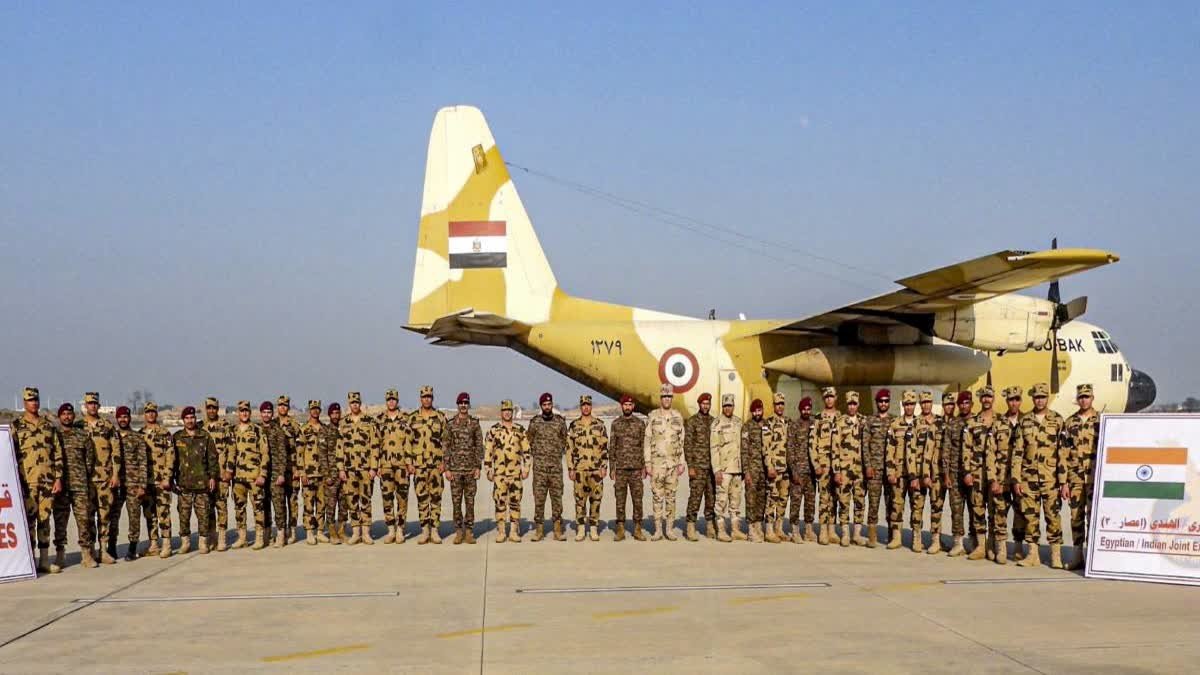
The keyword shaping today’s evolving geopolitical landscape is military cooperation, and it is playing out clearly as India and Egypt officially launch their joint special forces exercise, “Cyclone.”
This strategic military engagement marks a deepening of defense ties between two influential regional powers and reflects a broader global shift toward diversified alliances beyond traditional Western blocs.
The “Cyclone” exercise brings together elite special forces units from both nations in a coordinated training program designed to enhance interoperability, combat readiness, and tactical coordination. The drills are expected to cover counter-terrorism operations, urban warfare simulations, intelligence-sharing frameworks, and joint mission planning.
For both countries, the objective is clear: build a more adaptive and responsive military partnership in an increasingly unpredictable global security environment.
For India, the exercise aligns with its long-term strategy of expanding defense partnerships beyond its immediate neighborhood and traditional allies. As a rising global power, India has been actively engaging countries across Africa and the Middle East to strengthen security cooperation, secure trade routes, and project strategic influence.
This is part Egypt’s Military Ambition
Its collaboration with Egypt—a key player in both Arab and African geopolitics—underscores this ambition.On the other hand, Egypt continues to position itself as a central military and diplomatic force in North Africa and the Middle East.
By partnering with India, Egypt diversifies its defense relationships, reducing overreliance on Western military support while enhancing its operational capabilities through exposure to new tactics and technologies. Beyond bilateral relations, the “Cyclone” exercise speaks to a larger global trend: the gradual emergence of multi-aligned security partnerships.
Countries are no longer relying solely on Western-led alliances such as NATO but are instead building flexible, interest-driven coalitions that reflect shifting economic and political realities. This evolution is particularly visible across the Global South, where nations are seeking greater autonomy in shaping their security agendas.
The timing of the exercise is also significant. Amid rising global tensions, shifting energy dynamics, and ongoing conflicts in key regions, countries like India and Egypt are proactively strengthening their defense preparedness. Joint exercises such as “Cyclone” not only improve military efficiency but also serve as a powerful diplomatic signal—demonstrating unity, readiness, and shared strategic interests.
Where does Africa stand?
Critically, this growing cooperation may have ripple effects across Africa. As Egypt deepens ties with emerging powers like India, other African nations could follow suit, exploring new defense partnerships that align more closely with their national interests. This could gradually reshape the continent’s security architecture, reducing dependency on traditional power centers and fostering a more balanced global order.
In essence, the launch of “Cyclone” is more than just a military drill—it is a reflection of a world in transition. As global power dynamics continue to shift, partnerships like that of India and Egypt highlight a future where influence is more distributed, alliances are more fluid, and strategic cooperation is increasingly driven by shared interests rather than historical alignments.