







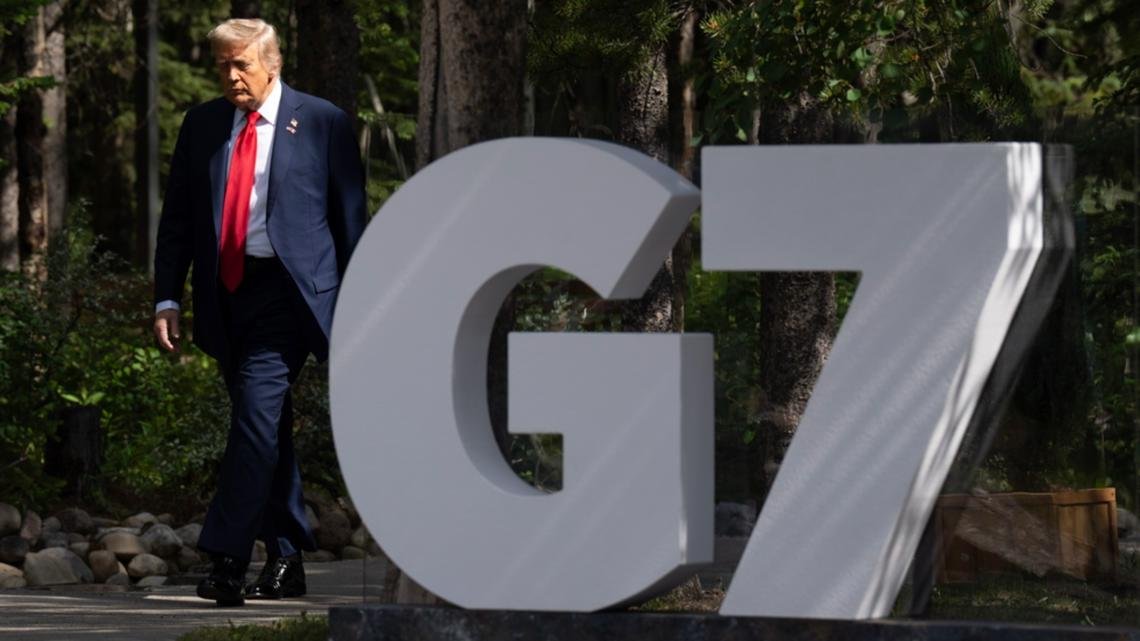
During discussions with leaders of the world’s most advanced economies, Donald Trump reportedly told members of the Group of Seven that Iran may be “close to surrender” amid mounting military and economic pressure.
The comments came during high-level conversations focused on the escalating conflict involving the United States, Israel, and Iran. According to diplomatic sources, the discussions centered on strategies to manage the geopolitical and economic implications of the crisis.
Leaders from several major economies expressed concern about the potential consequences of a prolonged conflict, particularly its impact on global energy markets and international security. Some governments have called for renewed diplomatic efforts aimed at preventing further escalation.


Trump’s remarks have sparked debate among analysts about whether Iran’s leadership is likely to change its strategic posture under current conditions. While some experts believe sustained pressure could force negotiations, others argue that the Iranian government may resist concessions in order to maintain domestic political support.
The conflict has already reshaped diplomatic discussions across Europe, Asia, and the Middle East. Governments are weighing how to respond to the rapidly evolving situation while attempting to prevent the crisis from triggering a wider regional war.
In addition to military considerations, the economic implications remain a major concern. Rising oil prices and disruptions to global supply chains could affect economies far beyond the Middle East.
Despite the tensions, several international organizations have emphasized the importance of diplomatic channels. Calls for negotiations and de-escalation have come from multiple governments seeking to avoid further instability.
As the situation develops, the statements made by global leaders during these high-level discussions may influence both diplomatic strategies and the broader geopolitical landscape.