



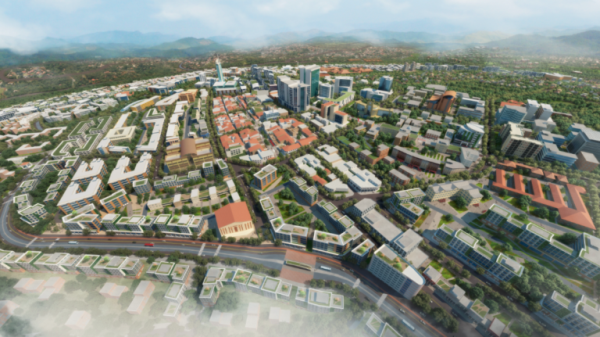
Rwanda is advancing one of Africa’s most ambitious urban development strategies with the rollout of Green City Kigali, a $5 billion project designed to reshape how cities are planned across the continent.
Moreso, located in Kigali, the development will span approximately 620 hectares and deliver about 30,000 housing units, targeting low- and middle-income residents. The project is expected to accommodate up to 150,000 people, positioning it as a critical intervention in addressing urban housing shortages.
An Urban Expansion and Climate-Resilient Infrastructure
However, beyond housing, Green City Kigali reflects a deliberate policy shift by the Rwandan government toward controlled urban expansion and climate-resilient infrastructure. The project integrates renewable energy systems, sustainable construction materials, and resource-efficient water and waste management solutions, aligning urban growth with environmental priorities.
For policymakers, the initiative forms part of a broader strategy to curb unplanned urban sprawl, which continues to strain infrastructure across many African cities. By prioritizing structured, mixed-income communities, Rwanda is attempting to balance rapid population growth with long-term sustainability and economic stability.
Also, the project also signals Rwanda’s intent to position itself as a continental leader in green development, using urban planning as both an economic and environmental tool. With Africa’s urban population projected to surge in the coming decades, initiatives like Green City Kigali could serve as a policy blueprint for governments navigating similar pressures.
At its core, the development is not just about building homes, it represents a shift in governance, where infrastructure delivery, climate policy, and social inclusion are increasingly interconnected.