




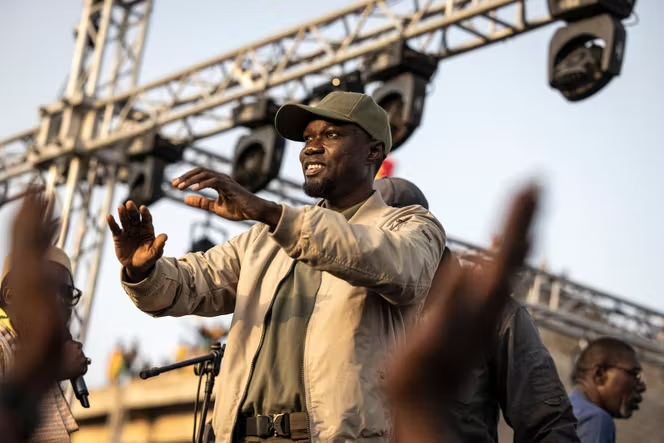
Senegal is witnessing a tense political standoff as Prime Minister Ousmane Sonko threatens to withdraw his party from the ruling coalition, citing irreconcilable differences with President Macky Sall over policy priorities, governance transparency, and economic strategies. The announcement underscores growing tensions within Senegal’s government at a time when citizens are grappling with economic slowdowns, inflation, and rising youth unemployment.
Sonko, whose party commands significant parliamentary representation, has leveraged the threat to press for reforms, including improved oversight of public funds, enhanced transparency in government decision-making, and greater inclusion of coalition partners in strategic policy choices.
Analysts note that a withdrawal could destabilize the government, potentially triggering early elections or a realignment of political alliances. This power struggle highlights the fragility of coalition governments, particularly in West Africa, where competing party interests must balance governance priorities with electoral legitimacy.


Public reaction has been mixed. Supporters of Sonko praise his willingness to challenge the president and advocate for accountability, while others fear that the political friction may hinder effective governance and derail economic recovery. Civil society groups are urging dialogue, emphasizing that political stability is essential for maintaining investor confidence and sustaining social programs.
Observers argue that this standoff reflects a broader regional trend, where coalition governments are increasingly under pressure to reconcile internal differences while navigating complex socio-economic challenges. The role of political negotiation, compromise, and institutional safeguards is more critical than ever in ensuring democratic resilience.
Economic analysts warn that prolonged political uncertainty could slow infrastructure development, disrupt public service delivery, and weaken Senegal’s position as a regional leader in democratic governance. Conversely, a negotiated settlement that respects party autonomy and strengthens coalition accountability could enhance government legitimacy and strengthen public trust.
As Senegal navigates this political impasse, both domestic stakeholders and international partners are watching closely. The resolution of this power struggle will have far-reaching implications, not only for internal governance but also for Senegal’s standing as a model of democratic practice in West Africa. Analysts emphasize that the coming weeks are critical: the government must demonstrate both responsiveness to coalition partners and commitment to citizens’ welfare to prevent further political instability.